
Now available in our country - special prescription glasses to reduce the growth of myopia (nearsightedness) in children and adolescents
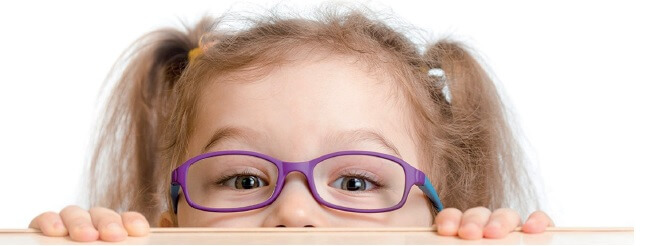
Dioptric glasses (CE-certified "controlled peripheral defocus design") aim to control a permanently worsening visual problem, namely the reduction of diopter growth (myopia) in childhood and adolescence.
Price: 1.56 CMA UV420 SHMC – 105 BGN/pc. for spherical diopters from -1.00 to -4.00 (in stock in Bulgaria)
Nowadays, over 30% of the Earth's population has myopia (3) (myopia) and their number is growing rapidly. Numerous scientists around the world and entire institutes are constantly engaged in researching the possibilities for the growth of myopia to be successfully controlled/reduced. Unfortunately, in our country, too, there has been a significant increase in the number of children developing myopia, especially in the last two years due to the radical measures adopted for online education of all children of risk age. Apart from the main complaint of patients with myopia (loss of visual acuity when looking at a distance), the main reason is that statistically the higher the diopter (especially above -5.00 DS), the more at risk the eye becomes of developing the following pathologies/diseases(3):
► Glaucoma (open-angle)
► Cataract (nuclear, cortical or posterior polar/capsular)
► Tears of the retinal layer, which can lead to retinal detachment
► Myopic maculopathy or myopic macular degeneration
Effectively reducing the growth of myopia can lead to a reduction in the incidence of high/dangerous myopia by up to 90%(3). One of the most accessible (among atropine therapy, orthokeratology, multifocal contact lenses and in some cases – bifocal/multifocal dioptric spectacle lenses) physical and financial options at the moment are the so-called single-focus dioptric spectacle lenses with controlled peripheral defocus (CMA), the purpose of which is to control the progression of myopia. The technology and design of these lenses are patented by the manufacturer. They cannot stop or resume the initial position (like any of the other alternative methods mentioned above), but only reduce the growth, the ultimate goal being to not reach high/risk degrees of myopia. With their help, the peripherally located images of the observed objects in space are focused in front of the retina (instead of behind it, which occurs with all other widely used types of dioptric lenses), while the central image of the observed objects falls on the macula and provides clear distance vision. The images falling in front of the retina in the periphery send a signal to the brain, which in turn reduces the stimulus for lengthening the size of the eyeball => reduces the growth of the diopter. Studies conducted in China (in East Asia, myopia covers over 80% of the population)(2), show that the rate of growth of myopia in the summer is 40% lower than in the winter months(1), when children spend most of their time indoors. Moreover, the risk of developing myopia can be significantly reduced (about 45%)(4) when children spend at least 1 hour/day more time outdoors. It is assumed that the main reason for this is related to the increased secretion of dopamine (a neurotransmitter in the retina), which changes the signal and regulates the growth rate of myopia. Accordingly, the healthy advice for every child/teenager (and their parents) is to spend more time outdoors.
In which cases is it reasonable to offer CMA lenses to children and are they suitable for every case? Any child with proven myopia can use these lenses, since adaptation to them is quick and easy (within a day or two). According to studies, their effect is positive (between 30% and 60% reduction in myopia growth)(5) when more of the following conditions are met:
► We have a tracked growth rate ≥ –0.50 DS/year
► At least one parent with myopia in the family (chromosomal inheritance)
► Young age of the patient (between 6-12 years)
► Girl > boy
► Duration of close viewing (≥ 3-4 hours per day, which is inevitable given the online learning environment)
► Lack of time spent outdoors
- Leslie Donovan, Padmaja Sankaridurg, Arthur Ho, Xiang Chen, Zhi Lin, Varghese Thomas, Earl L. Smith, III, Jian Ge, and Brien. Holden Myopia Progression in Chinese Children is Slower in Summer Than in Winter. Optom Vis Sci. 2012 Aug; 89(8): 1196– 1202.
- Pei-Chang Wu 1, Hsiu-Mei Huang, Hun-Ju Yu, Po-Chiung Fang, Chueh-Tan ChenEpidemiology of Myopia. Asia Pac J Ophthalmol (Phila). Nov/Dec 2016;5(6):386-393.
- Report of the Joint World Health Organization–Brien Holden Vision Institute. The impact of myopia and high myopia. University of New South Wales, Sydney, Australia 16–18 March 2015 (https://www.who.int/blindness/causes/MyopiaReportforWeb.pdf).
- Sankaridurg, P.; Donovan, L.; Varnas, S.; Ho, A.; Chen, X.; Martinez, A.; Fisher, S.; Lin, Z.; Smith, E. L.; Ge, J.; Holden, B.; Holden, B. "Spectacle Lenses Designed to Reduce Progression of Myopia: 12-Month Results." Optom. Vis. Sci. 2010, 87 (9), 631.
- Shuyu Xiong (1)(2), Padmaja Sankaridurg (3)(4), Thomas Naduvilath (3), Jiajie Zang (5), Haidong Zou (1)(2), Jainfeng Zhi (1) Minzhi Lv (1), Xiangui He (1)(6), Xun Xu (1)(2). Time spent in outdoor activities in relation to myopia prevention and control: a meta analysis and systematic review. Acta Ophthalmol. 2017; 95:551-66.